
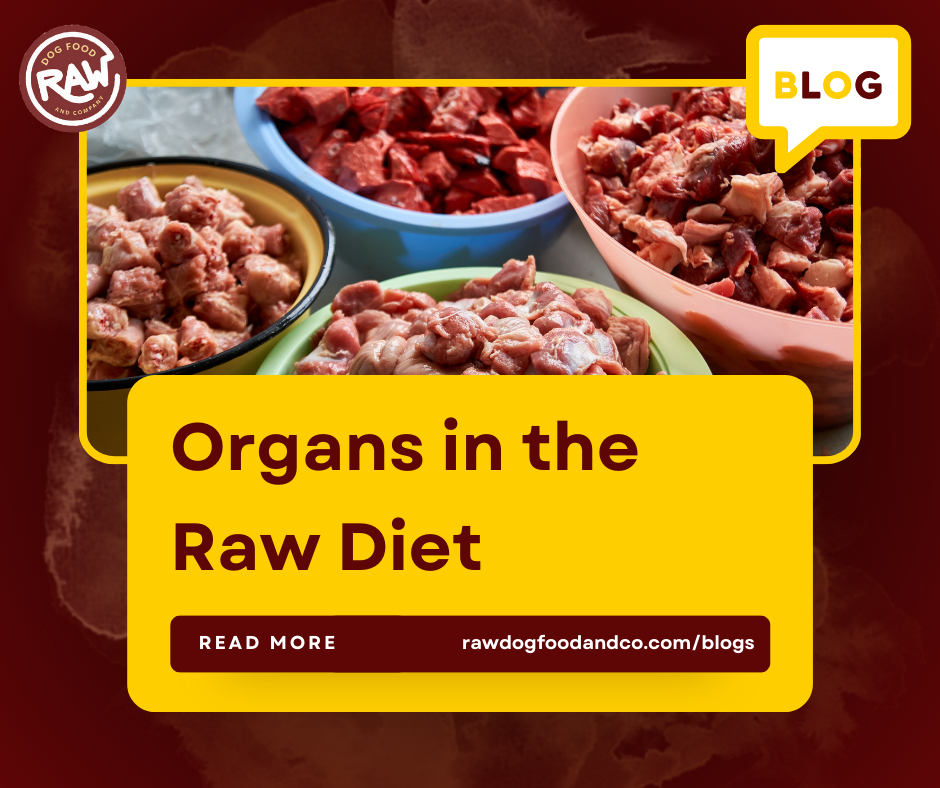
Organs in the Raw Diet
Organs are such an essential part of our pet’s diet. Adding a small amount of additional organs can considerably boost the bowl, even if you’re feeding a blend already containing organs. Organs are incredibly nutrient-dense and are often called “nature’s multivitamin.” If you observe animals in the wild or those consuming whole prey, you’ll see that the organs are the most coveted part of the kill and what the predator will consume first. That is because they are packed with so many valuable nutrients.
Organs and Nutrients
While muscle meat and bones may lack certain nutrients, organs are a nutritional powerhouse. They almost always contain every required nutrient, ensuring your pet’s diet is complete. Organs are rich in B vitamins and minerals like phosphorus, iron, copper, magnesium, and selenium, and also contain trace amounts of vitamins A and D. If you are concerned about nutrient loss in a product that has undergone HPP, the addition of a small amount of liver can more than compensate for any nutrient loss.
Your typical raw diet will suggest you feed at least 5% of the diet as liver and another 5% of another secreting organ. Puppies should typically boost those numbers to 7% as the added nutrients help support all the growing. Some diets recommend more, so use this as a baseline. Many dogs can handle more organs, especially when regularly fed raw meaty bones. Monitoring your dog’s stool will help determine how many organs your pup can handle. Don’t go overboard with organs; a little goes a long way. Stick to the above ratio regarding liver and another organ and do not feed all the various secreting organs simultaneously. Sticking to the ratio and rotating through various organs helps prevent nutrient imbalances.
“Like cures Like”
Using food as medicine is a cornerstone of holistic and homeopathic practice. The principle is that you can heal and support damaged organs by feeding those same organs. For example, if a pet suffers from heart disease, add heart to its diet, and if they have liver disease, add liver.
While on the subject of using the liver to heal, let’s dispel a myth about feeding liver as it relates to its role as a filter for toxins. Yes, the liver’s primary function is to filter and flush toxins. However, the liver does not store toxins. When you or your pet consumes liver, you are not consuming any toxins it may have previously processed and filtered.

Ground Beef Tripe (Formerly Green Tripe)
Benefits of Liver
Liver is one of the best suppliers of vitamin A, which aids in digestion, protects reproductive organs, and acts as an anti-oxidant against free radicals in the body. This is why liver should be included in the diet every day. Liver is sensitive to heat, so when possible feed it raw. Cooking liver will significantly reduce its nutrient content.
Liver varieties will also affect nutrients. Beef liver has more copper than pork liver, while pork has more iron than beef. This is why rotation is essential when feeding our pets and why we do not eat the same thing every meal. Rotation ensures diversity, which helps maintain the proper balance of vitamins, minerals, and other nutrients because different foods have different nutritional values.
Other Secreting Organs
In addition to liver, you want to feed another secreting organ. Examples are kidney, spleen, pancreas, brain, testicles, and heart. Anatomically, the heart is a muscle, but heart counts as an organ for feeding our pets. Heart contains a significant amount of bioavailable taurine, which makes it a valuable addition to the diet and an absolute necessity when feeding cats.
Green Tripe is not technically an organ but is a nutritional powerhouse nonetheless. Under the principle of “like cures like,” feeding the stomach can often help pets dealing with digestive issues. Tripe contains natural digestive enzymes, probiotics, balanced omega 3 and 6 fatty acids, perfectly ratioed calcium and phosphorous, and manganese. Like all the organs discussed here, tripe is best fed raw, or you will lose all the nutritional benefits. The tripe in the grocery store is bleached, not raw, and lacks nutritional value.
Not all dogs can consume organs
Certain breeds of dogs are sensitive to purines and, therefore, cannot consume organs. These dogs are the exception, not the rule, and not all dogs within those breeds will be affected. If this applies to your dog, consult a nutritionist to develop a specific plan. Also, consider genetic testing to see if your dog is at increased risk for developing urate stones. If he is not, he likely can consume organs just fine.
Final thoughts
Organs are incredibly nutrient-dense and are an essential and valuable part of your pet’s diet. Don’t be afraid to add a few extra to your pet’s bowl. If you cannot rotate protein sources or it isn’t easy, add some organs from other protein sources. You’ll boost your pet’s nutrient intake while adding some diversity with other animal sources.
Freeze-dried or air-dried organs have the same benefits as raw. These processes do not “cook” the organs, so there is no appreciable nutrient loss. If handling raw organs bothers you or sourcing is an issue, these make good alternatives.

